Dubai runs on contrast — a breakfast meeting in DIFC, a beach club lunch, a gallery opening in Alserkal Avenue, all in the same afternoon. Your handbag has to keep up with that pace without ever looking like it’s trying too hard. This guide breaks down exactly which handbag styles work for Dubai life in 2026, how to build a capsule collection instead of buying at random, and how to make each piece earn its place in your rotation.
Why Handbag Choice Works Differently in Dubai
Three things shape how Dubai residents actually use their bags, and they’re different from what you’ll read in a European or American styling guide:
- Climate control extremes. You move between 45°C heat outside and heavily air-conditioned malls, offices, and cars. Structured leather holds its shape in both; soft unlined canvas tends to sag in humidity.
- Multi-stop days. A single day might include a work meeting, a mall stop, and a dinner reservation. Bags that transition from desk to dinner without a wardrobe change back home are far more valuable here than single-occasion pieces.
- Visibility culture. Dubai’s social and professional scenes place real weight on how a bag looks up close — hardware finish, stitching, leather grain. Investment pieces are noticed and remembered, which is exactly why getting the shape and proportion right matters more than chasing every micro-trend.
The Five Everyday Bag Shapes Worth Owning in 2026
Rather than listing brands, think in terms of function. These five shapes cover almost every scenario you’ll face in Dubai this year.
1. The Structured Top-Handle Bag
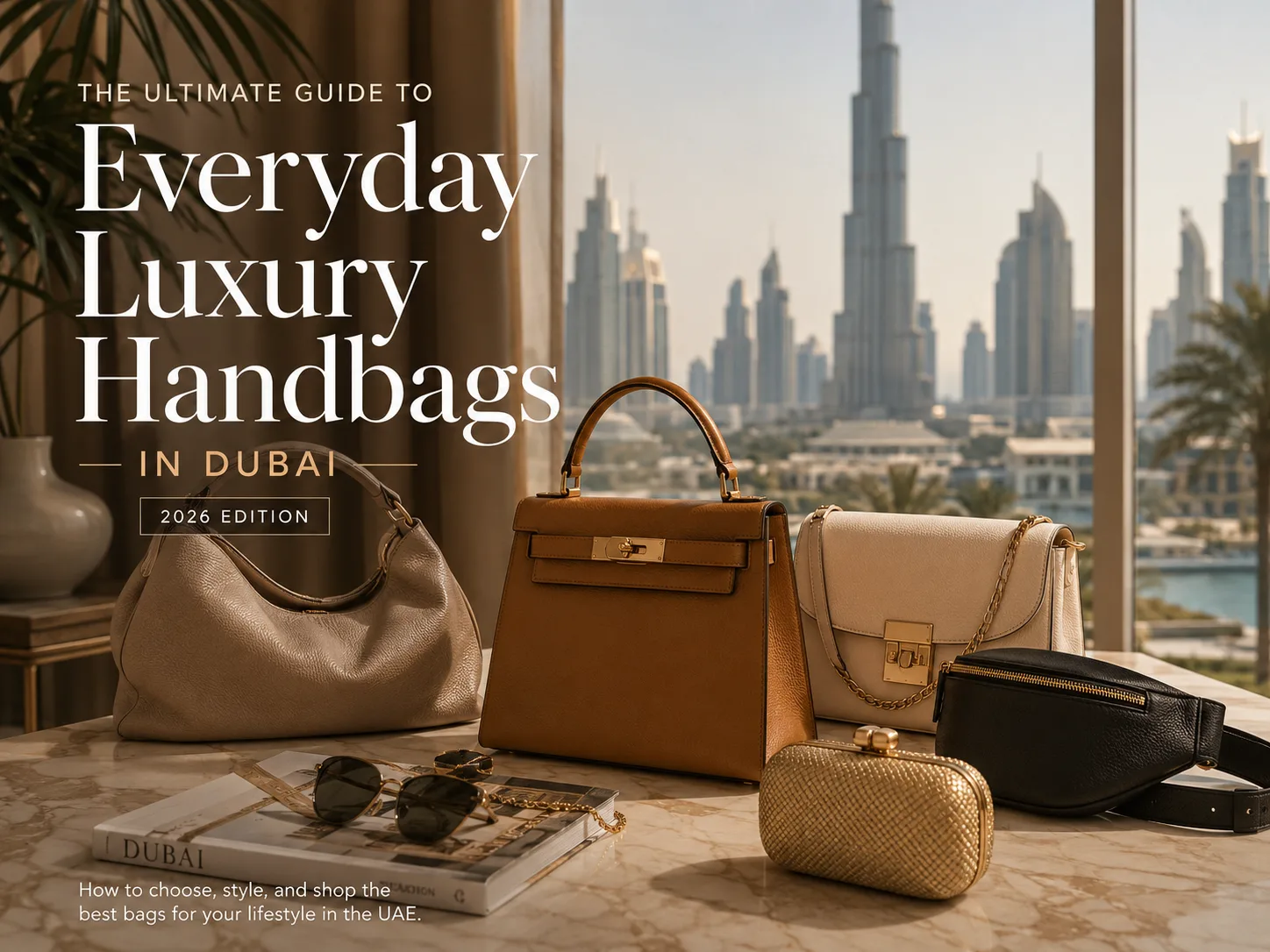
This is your Monday-to-Friday anchor piece. A boxy, structured top-handle in a neutral tone (cognac, black, or ivory) reads as polished in a boardroom and still feels appropriate walking into a business lunch at a five-star hotel. Look for a top handle short enough to sit comfortably in the crook of your elbow — Dubai’s valet-and-car lifestyle means you’re carrying it in short bursts, not for hours on foot. shows the boxy, hand-carry proportions worth building your work wardrobe around.
2. The Everyday Crossbody
For mall days, souk visits, and anywhere you want your hands free, a mid-size crossbody with adjustable strap length does the heaviest lifting in a Dubai wardrobe. Choose one with a structured base so it doesn’t collapse when half-empty, and prioritize a chain or leather strap that can be shortened for evening wear — one bag, two occasions. illustrates the compact, adjustable-strap proportions that move easily from day to evening.
3. The Soft-Slouch Shoulder Bag
This is the counterbalance to your structured pieces — a relaxed, slightly slouchy shoulder bag for weekend brunches, beach-adjacent lunches, and casual dinners. Soft grain leather in warm neutrals (taupe, sand, chocolate) pairs naturally with the linen and flowing silhouettes that dominate Dubai’s daytime dress code.
4. The Compact Evening Clutch
Dubai’s dinner and event culture is real, and a hard-sided or richly textured mini clutch is non-negotiable if you attend even one evening event a month. Metallic finishes and jewel tones photograph well under the low, warm lighting typical of Dubai’s restaurant and hotel scene.
5. The Convertible Belt Bag
The newest addition to the everyday rotation. A structured belt bag that converts to crossbody or clutch is ideal for desert safaris, beach clubs, and any day where a full-size bag is impractical but you still need cards, phone, and sunscreen on hand.
How to Build a Capsule Handbag Collection (Instead of Buying at Random)
A common mistake is collecting bags that all serve the same occasion. Instead, map your five shapes above against your actual week:
- Start with the structured top-handle (most-used, buy this first).
- Add the everyday crossbody (second most-used).
- Fill in the soft-slouch shoulder bag for weekends.
- Add one evening clutch — richer color, more texture, less “everyday” neutral.
- Add the belt bag last, once your core four are in place.
This order maximizes cost-per-wear and avoids the trap of owning five bags that only work for one type of day.
Color Strategy for the Dubai Wardrobe
Neutrals do more work here than almost anywhere else, simply because of how often outfits shift between abaya-adjacent modest wear, resort wear, and Western tailoring in the same week:
- Cognac and tan — pairs with gold jewelry, which dominates Dubai’s accessory culture
- Black — the non-negotiable base, works day and night
- Ivory and bone — elevates summer linen and cotton pieces
- Deep emerald or burgundy — the one “statement” color worth owning, for evening pieces only
Caring for Leather in Dubai’s Climate
Heat and air conditioning are harder on leather than most people realize:
- Store bags upright with the shape supported (stuffed with tissue paper), not flat, to prevent cracking in dry AC air.
- Avoid leaving any bag in a parked car — cabin temperatures in Dubai regularly exceed leather’s safe threshold within minutes.
- Condition leather every 6–8 weeks rather than the 3–4 months recommended in cooler climates.
- Keep hardware dry after beach club or pool-side outings; salt air accelerates tarnishing on gold-tone fittings.
Frequently Asked Questions
What is the most versatile handbag shape for everyday use in Dubai? A mid-size structured crossbody is generally the most versatile, since it transitions between mall, office, and casual dinner settings without needing to be swapped out.
How many handbags does a Dubai capsule wardrobe really need? Five well-chosen shapes — a structured top-handle, an everyday crossbody, a soft shoulder bag, an evening clutch, and a convertible belt bag — cover nearly every occasion across a typical month.
Do lighter-colored bags work in Dubai’s climate? Yes, especially ivory and tan tones, which pair naturally with the linen and light fabrics worn during Dubai’s long warm season, though they do require more frequent conditioning and cleaning.
How should leather handbags be stored in Dubai homes? Upright, supported with tissue paper, and away from direct air-conditioning vents, which can dry out leather faster than in more humid climates.